 In our ongoing series of posts highlighting companies that have taken extra steps to satisfy Occupational Safety & Health Administration (OSHA) safety requirements in their Voluntary Protection Programs (VPP), a cooperative program that recognizes employers and employees who proactively prevent worksite injuries and illnesses, here we look at DUNMORE Corporation, a provider of engineered and laminated film.
Headquartered in Bristol, Pa., DUNMORE produces coated film, metallized film and laminating film substrates for a wide range of industries. In 2010, the company’s film contract manufacturing facility in Bristol achieved VPP Star certification for superior workplace safety.
The VPP Star program is designed for exemplary worksites with comprehensive, successful safety and health management systems. Companies in the Star program have achieved injury and illness rates at or below the national average of their respective industries. These sites are self-sufficient in their ability to control workplace hazards. Participants are re-evaluated every three to five years, although incident rates are reviewed annually.
“DUNMORE has pursued this certification to enhance the framework to drive future improvement in our already strong health and safety systems,” Tom Rimel, VP of operations and development at DUNMORE, said in a statement at the time. “Safety and associate well-being is a core value of the company, and we believe that no activity of our business is as important as associate safety.”
DUNMORE’s commitment to safety and associate wellbeing does not begin or end at its initial VPP Star certification. The company, which has been continuously improving its safety and health programs throughout its entire 40-year history, has also begun working toward VPP Star certification at its Brewster, NY, manufacturing facility.
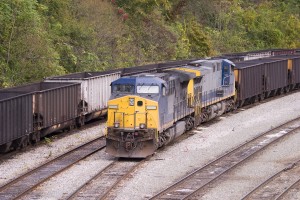 In the 1880s, freight cars became a popular way to transport agricultural products from the farms to the market. Transporting goods by rail remains one of the most cost and energy efficient ways to move bulk quantities of raw materials today. Modern freight cars are not only capable of containing a tremendous volume of goods such as sugar and limestone, but also hauling a great deal of weight – up to 120 tons!
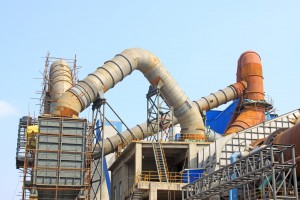 Grain dust is highly combustible and can burn or flare up if enough becomes airborne or accumulates on a surface and finds an ignition source. To help reduce or eliminate accumulations of ignitable dusts inside a plant or facility, industrial vacuums are the ideal solution for efficient and effective cleaning.
 Limited Lifetime Warranty – Any industrial vacuum should come with a limited lifetime warranty. Purchasing a vacuum system is a long-term investment decision, which is why it is important to get a manufacturer’s warranty giving you the assurance and long-lasting protection in the product you are buying. It marks the manufacturer’s unwavering commitment to quality that lasts.
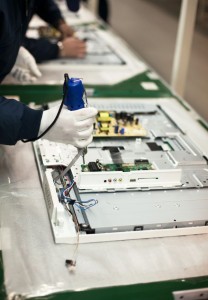 Did you know that the desired cleanliness level for integrated circuit manufacturing is
 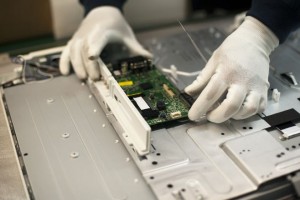 In electrical and electronics industries, where cross-contamination and the collection of ultra-fine particles is a key concern, the ideal industrial vacuum should utilize a HEPA filtration system, which removes 99.7 percent of particles that have a size of 0.3 microns, and they keep contaminants from re-entering the air supply. Because maintaining clean-room standards requires proper cleaning of all floors and surfaces, the HEPA-filtered vacuum should meet stringent standards in collecting and retaining microscopic particulate that can damage the most sensitive electronics equipment.
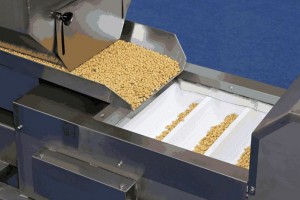 The food and beverage industry recalled about 8.5 million units of products in the first quarterof 2013. Based on
 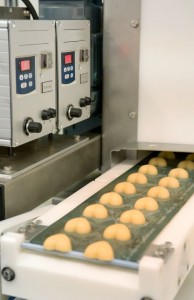 Of course, industrial vacuums come in many different forms to satisfy specific applications for the food industry. Here are a few industrial vacuum features to look for in the maintenance needs of the food industry: